Why has knitting become popular again?
Several factors have contributed to the resurgence of knitting's popularity in recent years:
Therapeutic Benefits: Knitting is known for its calming and meditative effects. Many people find it therapeutic and use it as a way to relax, reduce stress, and practice mindfulness in our fast-paced world.
Creative Expression: Knitting offers a creative outlet for self-expression. With countless yarns, colors, and patterns to choose from, knitters can create unique and personalized items that reflect their style and personality.
Community and Social Connection: Knitting fosters a sense of community and social connection. Knitters often gather in groups, either in person or online, to share tips, patterns, and camaraderie. This sense of belonging and support can be especially valuable in an increasingly digital and isolated world.
Fashion Trends: Knitting has been embraced by the fashion industry, with designers incorporating knitwear into their collections. As a result, knitting has become trendy and fashionable, attracting new enthusiasts who are drawn to its versatility and style.
DIY Movement: The do-it-yourself (DIY) movement has gained momentum in recent years, with many people seeking to reclaim traditional skills and make things by hand. Knitting fits into this ethos, offering a way to create handmade, artisanal goods in a world dominated by mass production.
Accessibility: The internet has made knitting more accessible than ever before. Online platforms provide a wealth of resources, including tutorials, patterns, and forums where knitters can connect and learn from each other. Additionally, yarn shops and knitting events have proliferated, making it easier for people to get started and stay engaged in the craft.
Overall, the resurgence of knitting can be attributed to its therapeutic benefits, creative appeal, sense of community, alignment with fashion trends, embrace of the DIY movement, and increased accessibility through digital and physical channels.
Don't miss out on the fun and the great fellowship among us knitters.
A short History of Knitting
Early Origins: The earliest known examples of knitting date back to around the 11th century CE in Egypt, where fragments of knitted cotton socks were discovered. However, some scholars argue that knitting may have existed even earlier, possibly in the Middle East or South America.
Medieval Europe: Knitting became more widespread in Europe during the Middle Ages, particularly in countries like Spain, France, and England. Initially, it was primarily practiced by men, often as a trade guild skill. The first knitting guilds appeared in Europe in the 13th century.
Renaissance: Knitting gained popularity among European aristocrats during the Renaissance. It was considered a valuable skill, and finely crafted knitted garments became status symbols.
by Rachael Herron: A memoir told through the lens of different knitting projects throughout the author's life.
Love in Every Stitch: Stories of Knitting and Healing
by Lee Gant: A collection of real-life accounts detailing how knitting has helped individuals cope with anxiety, loss, and physical illness.
Knitting Yarns and Spinning Tales
by Kari Cornell: An anthology of essays from various authors exploring the wit and wisdom found in the knitting community.
The history of knitting is rich and fascinating, spanning thousands of years and various cultures around the world. While the exact origins of knitting are uncertain, evidence suggests that it emerged in multiple regions independently.
Industrial Revolution: The invention of knitting machines during the Industrial Revolution in the 18th century revolutionized the production of knitted goods, making them more accessible to the general population. However, hand knitting continued to be practiced in homes, especially for intricate designs and personalized items.
19th and 20th Centuries: Knitting remained popular throughout the 19th and 20th centuries, with trends and techniques evolving alongside changes in fashion and technology. World War I and World War II further popularized knitting as women on the home front knitted socks, scarves, and other items for soldiers.
Revival and Modern Era: In the late 20th and early 21st centuries, knitting experienced a revival as a hobby and art form. Knitting communities formed both online and offline, sharing patterns, techniques, and inspiration. Knitting has become not only a practical skill but also a form of creative expression for many people.
Throughout its history, knitting has served various purposes, from providing clothing and warmth to expressing cultural identity and creativity. Today, it continues to evolve as new materials, technologies, and design trends emerge, ensuring its enduring popularity across the globe.
Helpfull downloads:
Kitchener Stitch Explained
The Kitchener stitch is a popular knitting technique used to seamlessly join two sets of live stitches, most commonly at the toe of socks. It creates an invisible, flexible graft that looks like regular knitting, making it ideal for projects where a smooth finish is desired. This method involves using a tapestry needle and yarn to weave the stitches together in a way that mimics the knit and purl structure, ensuring the join blends perfectly with the rest of your work.
The Setup
- Prepare the needles: Hold the two needles parallel with the wrong sides of the fabric facing each other and the tips pointing to the right.
- Yarn tail: Cut your working yarn, leaving a tail roughly 3 to 4 times the width of the piece you are joining.
- Initial steps (Preparation):
- Front needle: Insert your tapestry needle into the first stitch purlwise and leave it on the needle.
- Back needle: Insert your needle into the first stitch knitwise and leave it on the needle.
The 4-Step Repeat (The "Mantra")
Once the setup is done, repeat these four steps until only one stitch remains on each needle:
- Front needle: Insert knitwise, slip the stitch off.
- Front needle: Insert purlwise, leave the stitch on.
- Back needle: Insert purlwise, slip the stitch off.
- Back needle: Insert knitwise, leave the stitch on.
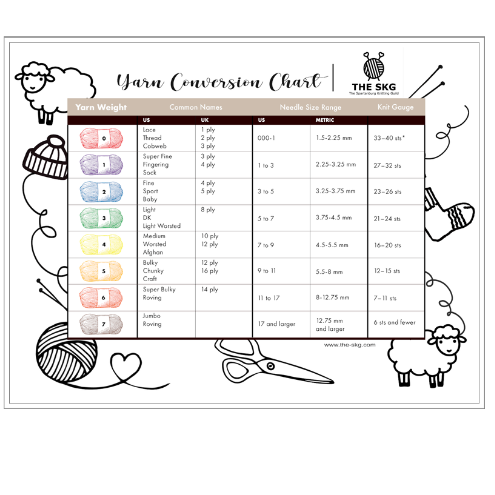
A yarn conversion chart is a "translation" tool used to identify equivalent yarn thicknesses across different global systems—primarily the US, UK, and Australia. Because terms like "Worsted" or "DK" vary by region, these charts ensure you select the correct material for a pattern to avoid sizing errors.
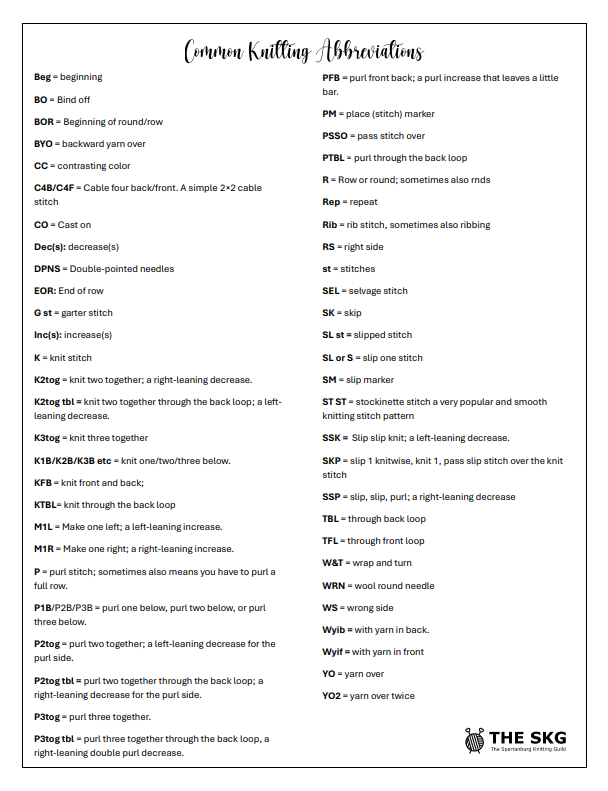
A dictionary of knitting terms is a specialized, alphabetical guide defining abbreviations, techniques, tools, and, in some cases, stitch patterns used in knitting, acting as a crucial resource to help crafters understand, interpret, and execute patterns correctly. These dictionaries often include, but are not limited to:
Common shorthand like CO (cast on), BO (bind off), K (knit), P (purl), K2tog (knit 2 together), YO (yarn over), RS/WS (right side/wrong side). More? Download our small dictionary here.
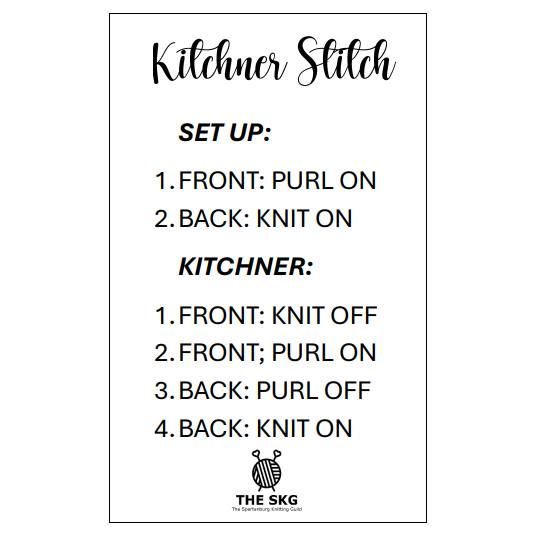
Pro Tip: Many knitters chant "Knit off, Purl on; Purl off, Knit on" to keep their rhythm.
Finishing
When you reach the last two stitches (one on each needle), work Step 1 (Knit off) and then Step 3 (Purl off) to close the gap. Pull the yarn through to the inside of the work and weave in the ends.
Ravelry: A vast database of knitting patterns, including many free ones.
- Website: Ravelry
Knitty: Offers a variety of free knitting patterns, including articles and tutorials.
- Website: Knitty
AllFreeKnitting: A website dedicated to free knitting patterns across various categories.
- Website: AllFreeKnitting
LoveCrafts: Provides free knitting patterns along with a wide range of yarns and supplies.
- Website: LoveCrafts
Lion Brand Yarn: Offers a collection of free knitting patterns suitable for all skill levels.
- Website: Lion Brand Yarn
Cascade Yarns: Provides a selection of free knitting patterns using Cascade yarns.
- Website: Cascade Yarns
Purl Soho: Offers a variety of modern and stylish free knitting patterns.
- Website: Purl Soho
Tin Can Knits: Provides free knitting patterns suitable for all skill levels, including tutorials and guides.
- Website: Tin Can Knits
Classic Elite Yarns: Offers a variety of free knitting patterns using Classic Elite yarns.
- Website: Classic Elite Yarns
Paintbox Yarns: Provides free knitting patterns using Paintbox Yarns products.
- Website: Paintbox Yarns
Yarnspiration: Offers free knitting patterns from popular brands like Bernat, Caron, and Patons.
- Website: Yarnspiration
Yarnspirations: Provides free knitting patterns from popular yarn brands like Bernat, Caron, and Red Heart.
- Website: Yarnspirations
Berroco: Offers free knitting patterns using Berroco yarns.
- Website: Berroco
DROPS Design: Provides thousands of free knitting patterns in multiple languages.
- Website: DROPS Design
Knitting Pattern Central: A directory of free knitting patterns organized by category.
- Website: Knitting Pattern Central
Garnstudio: Offers free knitting patterns in multiple languages, sponsored by DROPS Design.
- Website: Garnstudio
Red Heart: Provides a selection of free knitting patterns using Red Heart yarns.
- Website: Red Heart
Cascade Yarns: Offers free knitting patterns using Cascade Yarns products.
- Website: Cascade Yarns
YARNDANCE: Offers free original knitting patterns by India Tresselt
- Website: YarnDance
Schachenmayr: Provides free knitting patterns using Schachenmayr yarns.
- Website: Schachenmayr
Let's Knit: Offers a selection of free knitting patterns, including a variety of techniques and projects.
- Website: Let's Knit
20 websites with free knitting patterns
Yarn Amount Estimation
Estimating yarn amounts can vary depending on factors such as the weight of the yarn, the size of the project, the stitch pattern used, and your personal knitting tension. Here's a general guideline to help you estimate yarn amounts:
Check the Pattern: Most knitting patterns will specify the amount of yarn needed in terms of yardage or meters. Always refer to the pattern first for the most accurate estimation.
Yarn Weight and Gauge: The weight of the yarn (e.g., fingering, worsted, bulky) and the gauge (stitches and rows per inch or centimeter) specified in the pattern are crucial for estimating yarn amounts. Make sure to use a yarn that matches the weight and gauge specified in the pattern to get accurate results.
Yarn Yardage Conversion: If the pattern specifies yarn amounts in a different unit than your yarn label (e.g., yards vs. meters), you may need to convert the measurements. Use a reliable conversion tool or calculator to ensure accuracy.
Size of Project: Larger projects will naturally require more yarn than smaller ones. Consider the dimensions of the finished item and whether you'll need to make any modifications that could affect yarn usage.
Swatching: Making a gauge swatch with your chosen yarn and needles is essential for accurate yarn estimation. Measure the gauge of your swatch and compare it to the pattern gauge. Adjust your needle size if necessary to match the pattern gauge, as this can significantly impact yarn usage.
Allow for Extra: It's always a good idea to purchase a bit more yarn than the pattern suggests to account for any discrepancies in gauge, variations in dye lots, or unexpected changes in the project. A common recommendation is to add around 10-20% to the estimated yarn amount as a buffer.
Consider Stitch Patterns: Certain stitch patterns, such as cables or lace, can use more yarn than simple stockinette or garter stitch. Keep this in mind when estimating yarn amounts for projects with intricate stitch patterns.
Keep Track as You Go: If you're unsure about how much yarn you'll need, you can start your project and keep track of how much yarn you've used as you progress. This way, you can estimate how much more yarn you'll need to complete the project based on the amount used so far.
By considering these factors and using the pattern specifications as a guide, you can make a reasonably accurate estimation of the amount of yarn needed for your knitting project.
Enjoy Audio Books while knitting?
Here is a short list of suggestions:
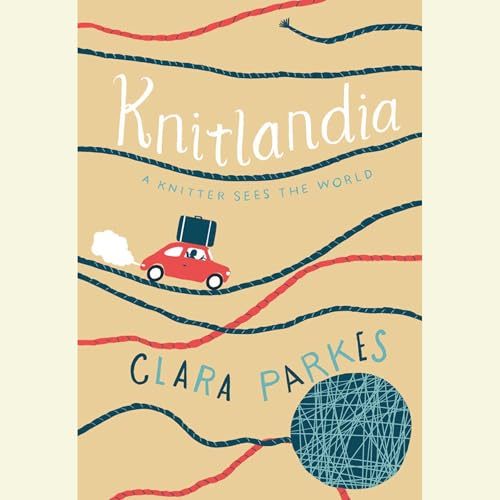
Knitlandia: A Knitter Sees the World
by Clara Parkes
Is narrated by the author, offering a witty, personal memoir of her travels to yarn festivals, mills, and shops around the world. The collection of 17 essays spans 15 years, covering destinations from Iceland to Paris, with a focus on fiber arts and the creative life.
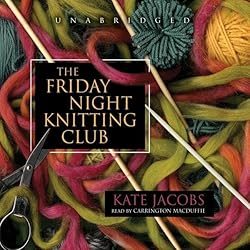
The Friday Night Knitting Club
by Kate Jacobs
A novel that revolves around a group of women who meet regularly at a knitting shop in New York City. It explores themes of friendship, love, and community.
by Maggie Sefton
This bestselling series, starting with Knit One, Kill Two, follows corporate accountant Kelly Flynn as she moves to Fort Connor, Colorado, after her aunt's murder and begins solving crimes with the help of the "House of Lambspun" knitters.
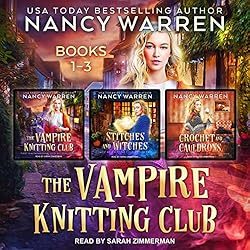
by Nancy Warren
Is a popular paranormal cozy mystery book series centered around Lucy Swift, a young American woman who inherits her grandmother's knitting shop in Oxford, England, only to discover a world of magic and murder.
The series begins when Lucy travels to Oxford to visit her grandmother, only to learn that her grandmother is "undying"—a vampire—and was murdered. Lucy is an out-of-work, non-knitting Bostonian who suddenly inherits her grandmother's shop, "Cardinal Woolsey's"